
Skincare Deep Dive: The truth about retinol
The most studied ingredient in skincare deserves more than a buzzword. Here's what it actually does — and how to use it without wrecking your skin.
Few skincare ingredients have earned their reputation as thoroughly as retinol. Backed by decades of dermatological research, it remains the gold standard for addressing fine lines, uneven texture, and dullness. And yet — it's also one of the most misunderstood, misused, and prematurely abandoned ingredients in any bathroom cabinet.
What retinol actually is
Retinol is a form of vitamin A, a fat-soluble nutrient your skin cells are already designed to use. When applied topically, it converts into retinoic acid — the biologically active form — which binds to receptors in skin cells and directly influences how they behave.
The result? Faster cell turnover, increased collagen production, unclogged pores, and a more even distribution of melanin. These aren't cosmetic illusions. They're measurable, structural changes to how your skin functions.
“Retinol, retinaldehyde, and prescription tretinoin are all retinoids — but they differ dramatically in strength. Over-the-counter retinol is roughly 20 times weaker than tretinoin, which is why results take longer but irritation is far more manageable.”
Choosing your strength
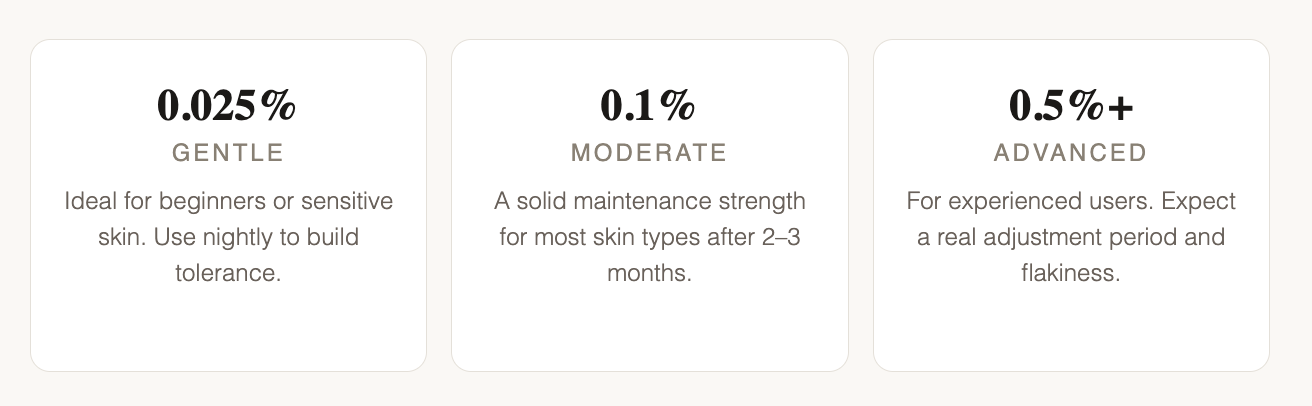
If you're new to retinol, the number on the label matters — but it's not the whole story. Start low, build slowly, and let your skin adapt before increasing concentration.
How to start without the disaster
The biggest mistake people make is introducing retinol too aggressively. The "retinol purge" — a period of breakouts, dryness, and peeling — is real, but it's largely avoidable with a sensible approach.
1 - Start with once or twice a week, not every night. Your skin needs time to upregulate its retinoic acid receptors before it can handle daily use without protest.
2- Apply to dry skin, after cleansing. Damp skin enhances absorption and dramatically increases irritation risk.
3- Use a pea-sized amount for the entire face. More is not more — excess product just irritates without adding benefit.
4- Follow with a rich moisturizer. The "sandwich method" — moisturizer, retinol, moisturizer — can help beginners ease in while still getting results.
5- Wear SPF every morning, without exception. Retinol increases photosensitivity significantly, and sun damage will undo everything you're working toward.
What to pair it with — and what to avoid
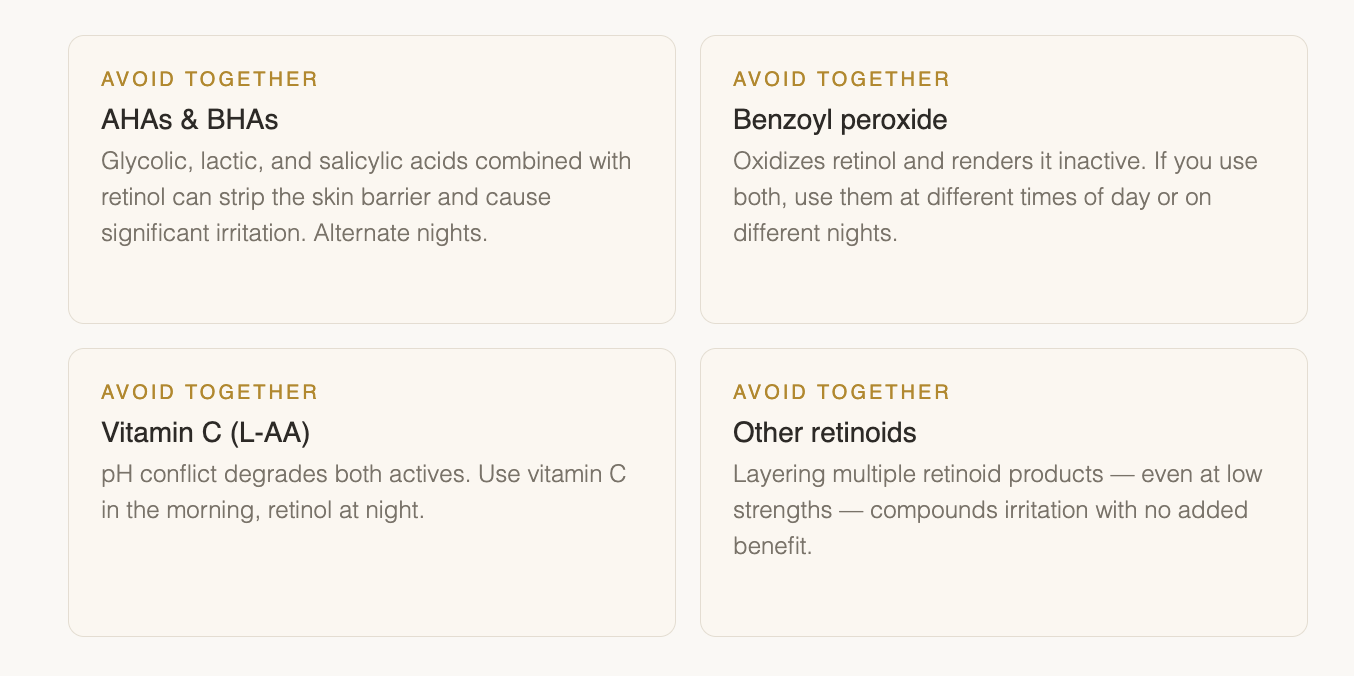
Retinol plays well with moisturizers, niacinamide, and hyaluronic acid. It does not play well with several other actives that are popular in the same routines.
When will you actually see results?
This is where expectations and reality most often diverge. Retinol is not a quick fix. Skin cell turnover takes roughly 28 days, and retinol's collagen-stimulating effects accumulate over months. Here's a rough timeline for what most people experience:
Weeks 1–4: You might see purging, flaking, or redness — especially if you've started too strong or too fast. Some people notice brighter skin early on.
Months 2–3: Texture often improves noticeably. Pores may appear smaller. Skin starts to look more refined and even in tone.
Month 6+: Fine lines soften. Collagen remodeling is underway. This is where the real payoff lives — and why quitting after a few weeks of irritation is such a common mistake.