

Why you are losing hair during perimenopause & what to do about it
Women's Health · 📍 Triangle Area, NC
If you've noticed more hair in your shower drain or a widening part in your mirror, you're not imagining things and you're not alone. Hormonal hair loss is one of the most under-discussed symptoms of perimenopause, affecting millions of women across the country, including right here in the Raleigh–Cary–Holly Springs area.
What Is Perimenopause and Why Is Hair Impacted?
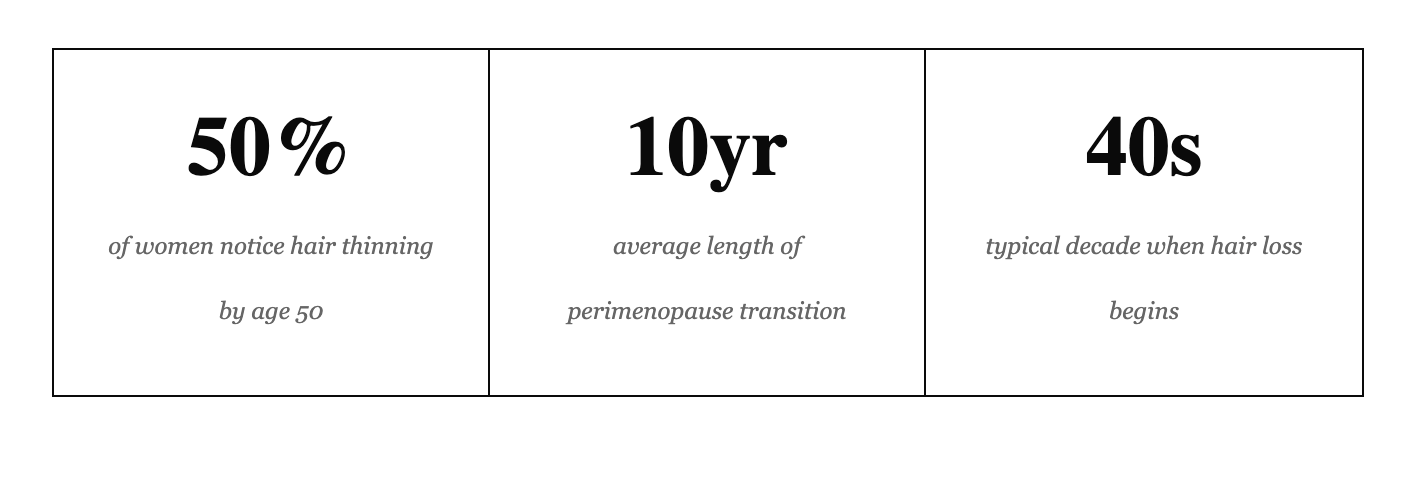
Perimenopause is the transitional phase leading up to menopause, typically beginning in a woman's 40s (though it can start as early as the late 30s). It's marked by fluctuating estrogen and progesterone levels as the ovaries gradually slow their hormone production. For many women in Raleigh, Cary, and Holly Springs, this phase arrives quietly, often before a single hot flash ever shows up.
Your hair follicles are exquisitely sensitive to hormonal shifts. Estrogen prolongs the growth phase of the hair cycle, keeping strands thick, strong, and anchored. When estrogen declines, that protective effect weakens. Meanwhile, androgens like testosterone, which women also produce, can become relatively more dominant, potentially triggering a pattern of thinning similar to what men experience with male-pattern baldness.
"Hair that grows more slowly, sheds more quickly, and comes in finer with each cycle — often most visible at the crown, along the part, or around the temples."
Signs Your Hair Loss Is Hormonal
Not all hair loss is the same. Here's what hormonally driven shedding typically looks like during perimenopause:
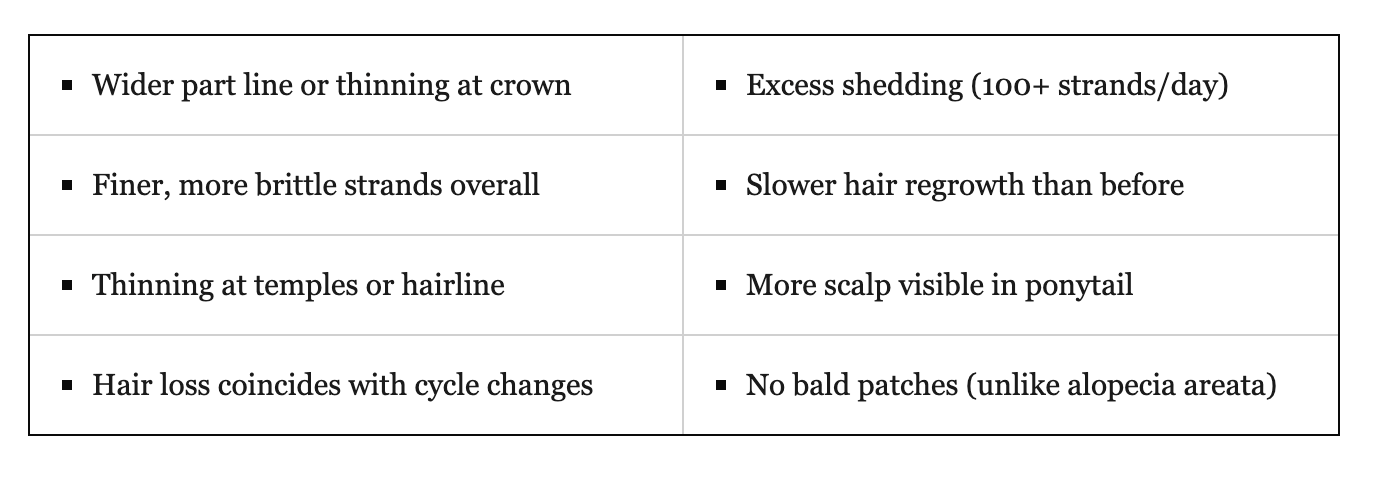
If you're also experiencing irregular periods, sleep disturbances, mood changes, or brain fog, these are strong signals that perimenopause is the underlying driver — not stress or nutritional deficiency alone, though those can make things significantly worse.
The Hormone + Hair Connection
Estrogen
Estrogen extends the anagen (growth) phase of the hair follicle cycle. As estrogen dips and surges unpredictably during perimenopause, follicles may spend less time growing and more time in the shedding phase, a pattern called telogen effluvium.
Progesterone
Progesterone naturally inhibits the conversion of testosterone into DHT, the androgen most responsible for follicle miniaturization. When progesterone falls, as it does during perimenopause, (often before estrogen does), DHT activity can increase unchecked, triggering female androgenetic alopecia.
Thyroid & Cortisol
Perimenopausal women are also at higher risk for thyroid dysregulation and elevated cortisol from chronic stress. Both can significantly worsen hair shedding. Many women in Wake County's fast-paced communities carry high stress loads that amplify hormonal hair loss. A full thyroid panel is worth requesting if hair loss is your primary concern.
Treatment Options Worth Knowing About
Perimenopausal hair loss is usually treatable, especially when caught early. Here are the evidence-supported approaches your provider may discuss with you:
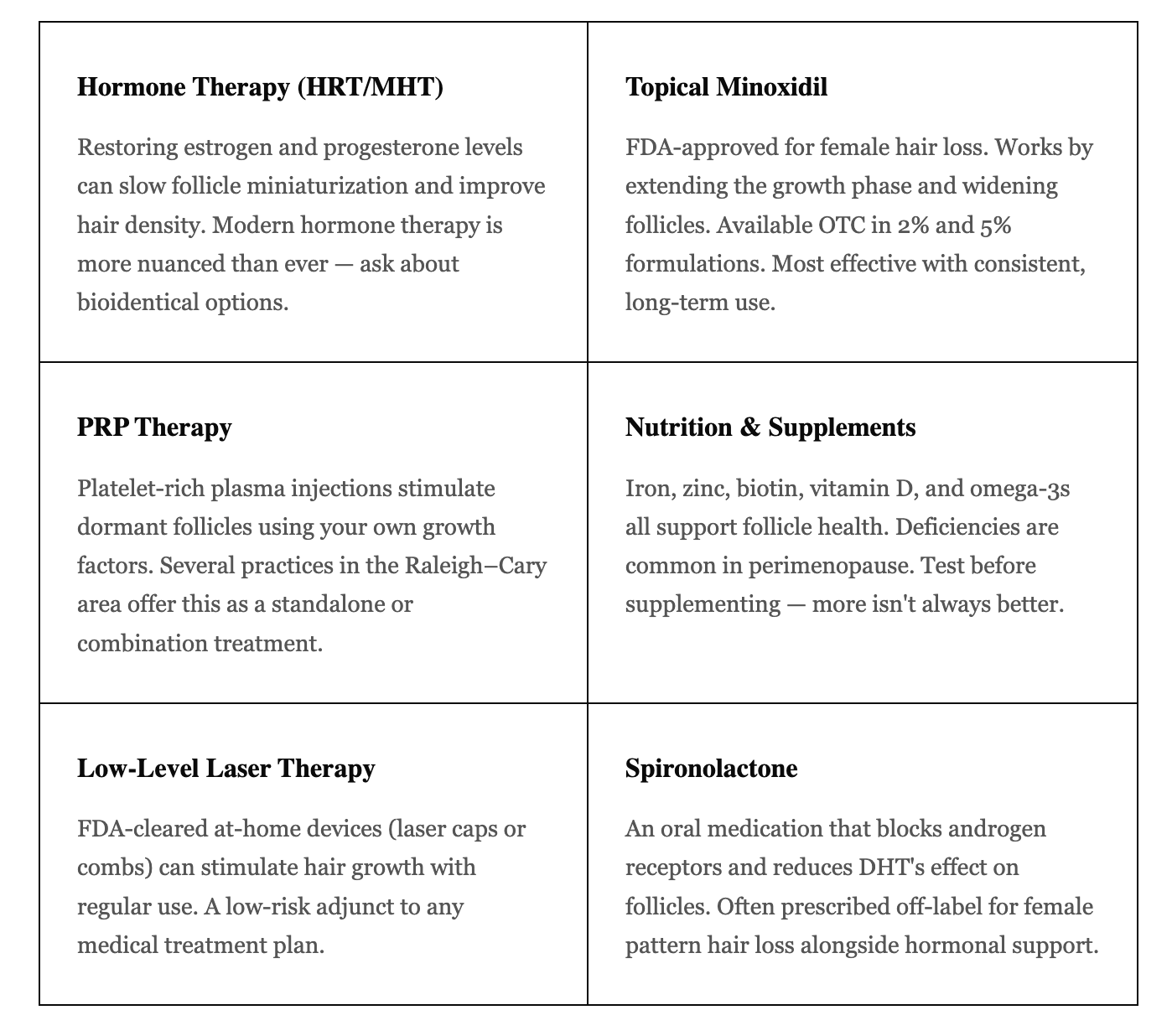
"The most effective approach is almost always individualized — a combination of hormonal support, targeted nutrition, and topical treatment tends to outperform any single strategy."
You Deserve Answers, Not Just Acceptance
Hair loss during perimenopause is real, common, and treatable. Don't wait for it to sort itself out.
Tip for Triangle women: When calling to schedule, ask specifically: "Do you have experience treating perimenopausal hair loss?" Providers who specialize here are often more current on treatment options than a general practitioner.