
Looking after yourself is an act of mental wellbeing
How aesthetic treatments can become part of a broader mental wellbeing toolkit and why feeling good on the outside can genuinely support how you feel on the inside.
There's a conversation happening in wellness communities, therapy rooms, and social media feeds that bridges two worlds once considered entirely separate: mental health and aesthetic self-care. For a long time, treatments like facials, injectables, or skin resurfacing were seen as purely cosmetic, even vain. But the evidence, and countless personal stories, are pointing to something more nuanced and more human.
Self-care is not superficial. When we feel comfortable and confident in our appearance, it can create a positive ripple effect throughout our lives, in how we hold ourselves in a meeting, how we engage socially, and ultimately, how we feel day to day.
The mind-body connection isn't just a phrase
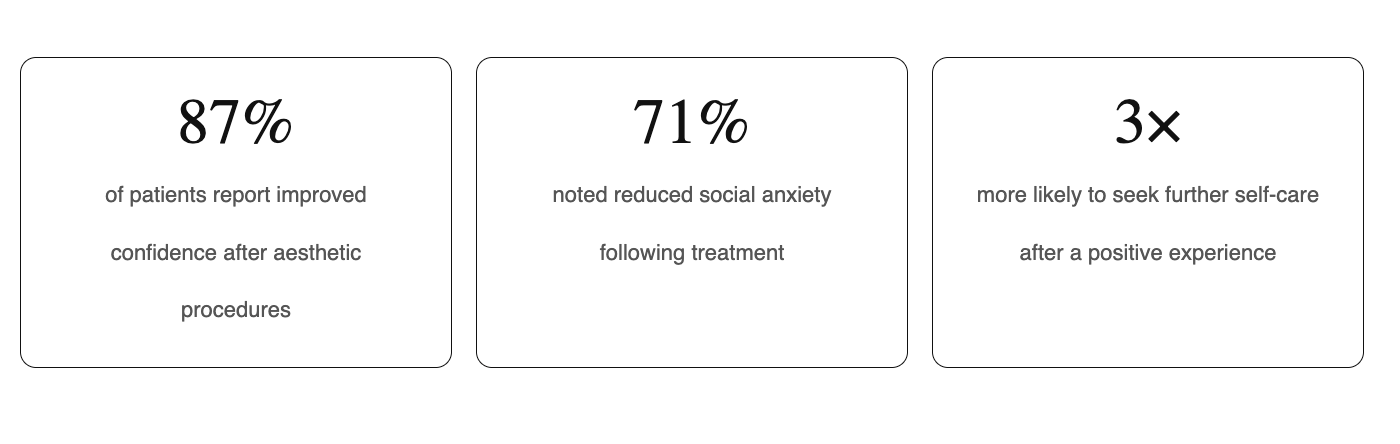
Modern psychology has long recognized that the way we perceive ourselves physically has a direct and measurable impact on our mental state. Body image, how we see and feel about our bodies, is one of the most significant factors affecting self-esteem, anxiety levels, and even social engagement.
When someone feels persistently self-conscious about a feature of their appearance, whether it's acne scarring, signs of fatigue, or something they've always felt uncomfortable with, the mental load can be substantial. The constant awareness, the avoidance of mirrors or photographs, the reluctance to engage fully in social situations: these small erosions add up.
Aesthetic treatments, approached thoughtfully, can interrupt that cycle. Not by chasing perfection, but by addressing a specific, named concern and in doing so, removing a persistent source of distress.
“Mental health conversations have come a long way over the years. People are talking more openly about stress, burnout, anxiety, confidence, and the importance of self-care. And while therapy, rest, exercise, and healthy habits are all important parts of wellness, there’s another piece of the conversation that often gets overlooked:
How we feel about ourselves when we look in the mirror.
For some people, medical aesthetics may seem “cosmetic” or “surface-level.” But for others, it’s much deeper than that. Feeling confident in your skin can positively impact the way you carry yourself, show up for loved ones, and move through everyday life. We simply want to feel more like ourselves.
Maybe it’s addressing dark, tired-looking eyes after years “Little Ones” and sleepless nights. Or maybe it’s finally treating acne scars that have affected our confidence since our teenage years. Perhaps it’s adding back the volume or glow that dulls with age and life’s curveballs.
These treatments aren’t always about changing our appearance — they’re often about reconnecting with the confidence we once had. When aesthetic treatments are approached in a healthy way, they can become part of our bigger wellness journey — one we build on confidence, self-respect, and feeling good in our own body.”
It's about intention, not insecurity
There's an important distinction worth making here. Aesthetic treatments pursued from a place of shame, external pressure, or a need to meet someone else's standard are unlikely to generate lasting positive feelings. In fact, research suggests that when treatments are driven by low self-worth rather than a desire for self-improvement, the psychological benefits are muted or absent.
But when someone chooses a treatment from a grounded place — "this particular thing bothers me, and I'd like to address it" — the outcomes are meaningfully different. The treatment becomes an act of self-directed care rather than an attempt to conform.
Good aesthetic practitioners understand this distinction. Many now work closely with patients to ensure expectations are realistic, motivations are healthy, and that treatments are part of a broader self-care picture, not a substitute for addressing deeper emotional needs.
“We are often encouraged to invest in things that improve their mental well-being like working out, having healthier eating habits, getting enough sleep, taking vacations, getting a massage, etc. So why shouldn’t aesthetic treatments fall into that same category of self-care?
When aesthetic treatments are approached in a healthy way, they can become part of our bigger wellness journey — one we build on confidence, self-respect, and feeling good in our own body.”
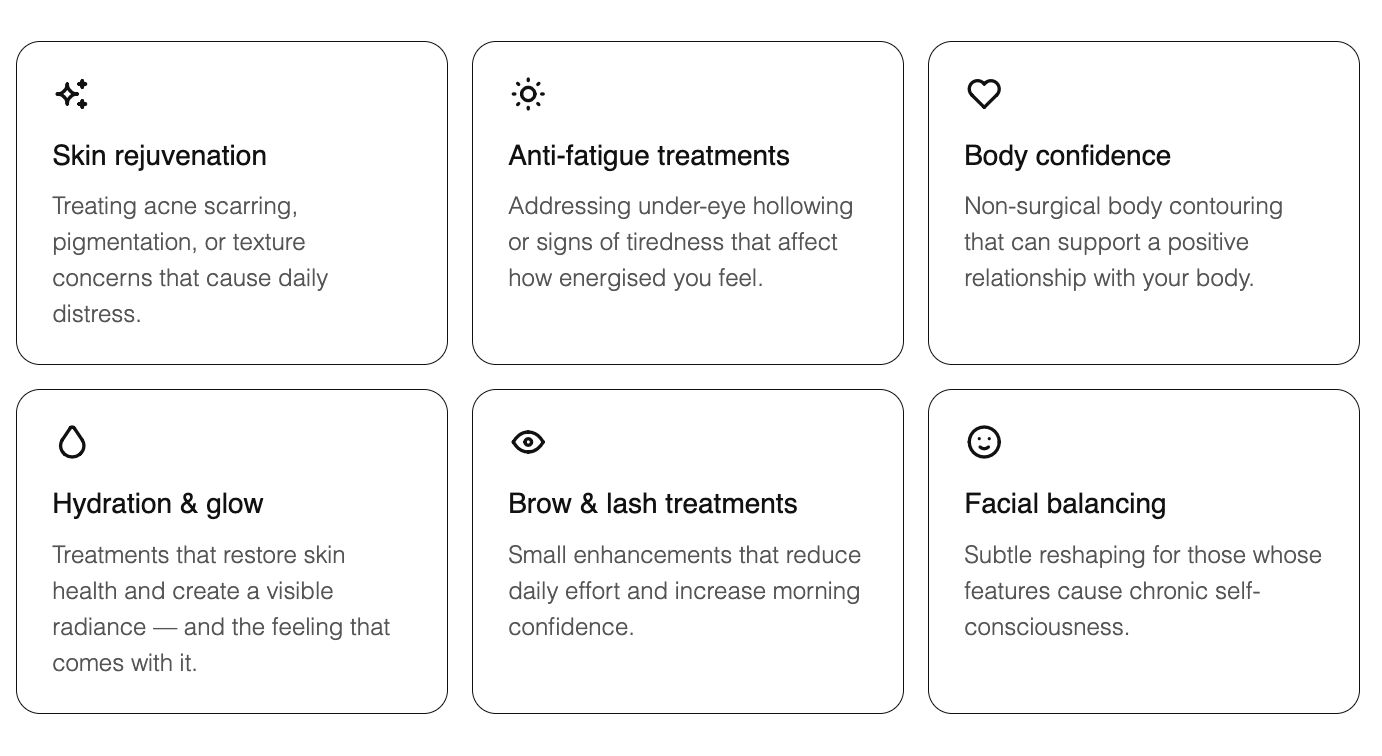
Common treatments that support confidence
The range of aesthetic treatments available today is broader than ever. When chosen for the right reasons and performed by qualified practitioners, many can play a meaningful role in someone's overall sense of wellbeing.
Small acts of care build bigger habits
One under-appreciated aspect of aesthetic self-care is how it can act as a gateway to broader wellness behaviors. When someone invests in their skin, for example, they often find themselves more consistent with their skincare routine, more mindful of sleep and hydration, and more attentive to their overall health. Positive reinforcement breeds positive habits.
This virtuous cycle, sometimes called the self-care momentum effect , is well documented in behavioral psychology. The act of doing something kind for yourself, and seeing a result, builds the belief that self-care is worth it. And that belief, once established, extends far beyond the treatment room.
What good aesthetic care looks like for mental health
If you're considering an aesthetic treatment as part of your wider wellbeing strategy, a few principles are worth holding onto:
Start with a conversation. A good practitioner will ask about your motivations, not just your concerns.
Be specific about what bothers you. Vague dissatisfaction with your appearance is worth exploring with a therapist or counsellor, not a clinic. Specific, nameable concerns are where aesthetic treatments tend to help most.
Don't expect transformation. The goal is to feel more like yourself, not like someone else. Treatments that shift you toward that feeling, even subtly, are the ones that tend to have the most positive psychological impact.
Think holistically. Aesthetic treatments work best when they're one part of a toolkit that includes good sleep, movement, nutrition, social connection, and, where needed, professional mental health support.
Note: This article explores the relationship between appearance confidence and wellbeing. It is not a substitute for professional mental health care. If you're struggling with body image, anxiety, or low mood, please reach out to a qualified mental health professional.